A dog training dream of mine is to teach a class for fearful dogs. Shy and fearful dogs are the dogs I'm drawn to work the most with when I'm teaching, and to have a class of 6 or so of them would be something I'd enjoy a lot.
There are very premature talks of a class like this eventually being offered. If it is, indeed, offered, there are several people (to my surprise) that are interested in being involved in it. Despite this, I've just as prematurely started to think about what the most important things to convey to a class of fearful dog handlers are if I was, indeed, to teach it.
1. Learn to think in terms of association, not rewards.
The distinction between classical and operant conditioning is, admittedly, something that is a bit hard to teach. Most people (unknowingly) only think in operant terms when training their dog - "If my dog doesn't bark, I'll reward him" - even when the situation might be better suited to associative learning - type work.
I think the best way to teach this concept is to avoid any technical terms (classical, operant, reinforcement, conditioned response) and to delve right in to the bare minimum that a fearful dog owner should know - how to use desensitization and counterconditioning to change what the dog does, rather than reinforcing outright behaviors.
Getting handlers to think in terms of "loud noise = cookies" or "new stranger = playing with a toy," as well as being able to recognize that fear is not voluntary, would be monumental in the rehabilitation of dogs of this type.
2. Learn how to properly approach a shy dog.
Even those who OWN shy dogs bend over, reach their hands out and talk to the dog to try to get it to sniff them. The reality is that this type of greeting is super scary to the dog - a big giant human hand is entering their space, maybe grabbing for them, and they just don't like the idea of that.
Much more beneficial is the idea of letting the shy dog approach on their own terms. Standing or sitting still, not making eye contact and not outstretching their hands is a much more inviting posture for a dog who is afraid of being touched by someone they do not know. As the comfort level increases, the new person can start to offer food, perhaps by throwing it on to the floor.
3. Learn how to stand up for what's best for a shy dog.
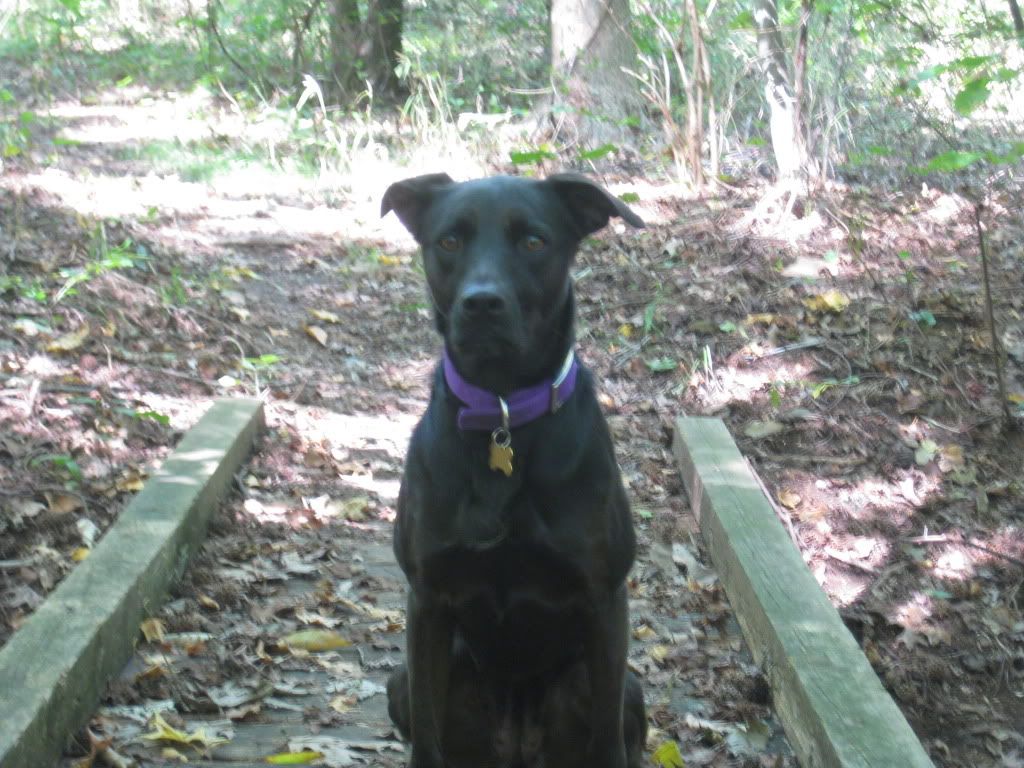
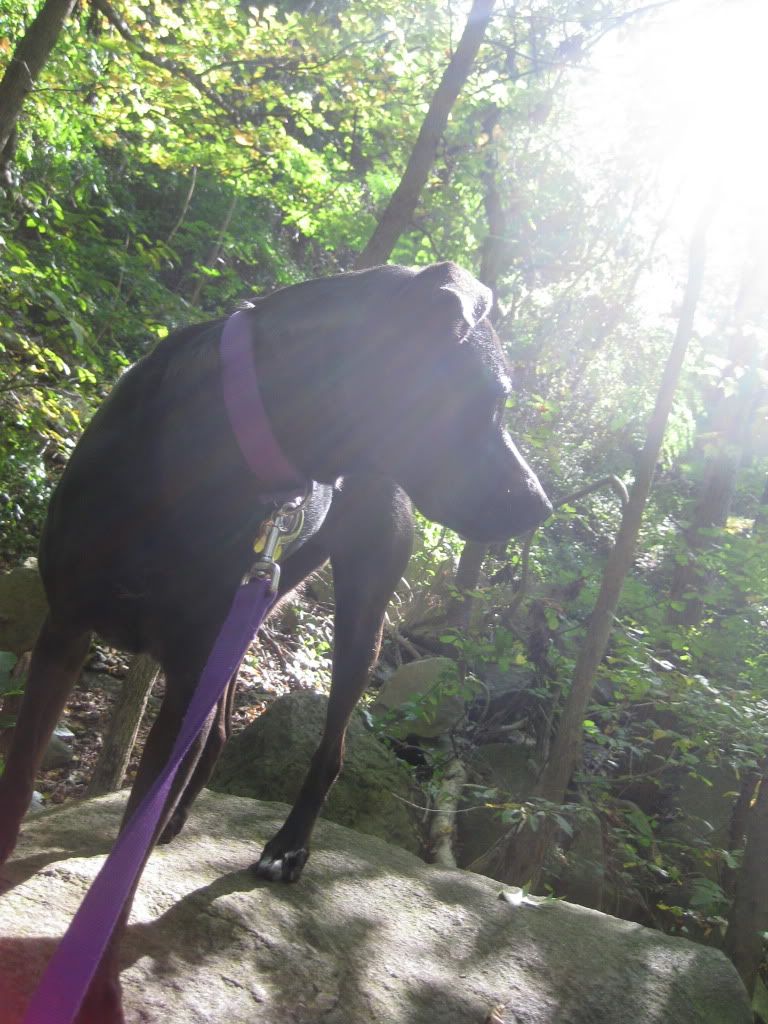
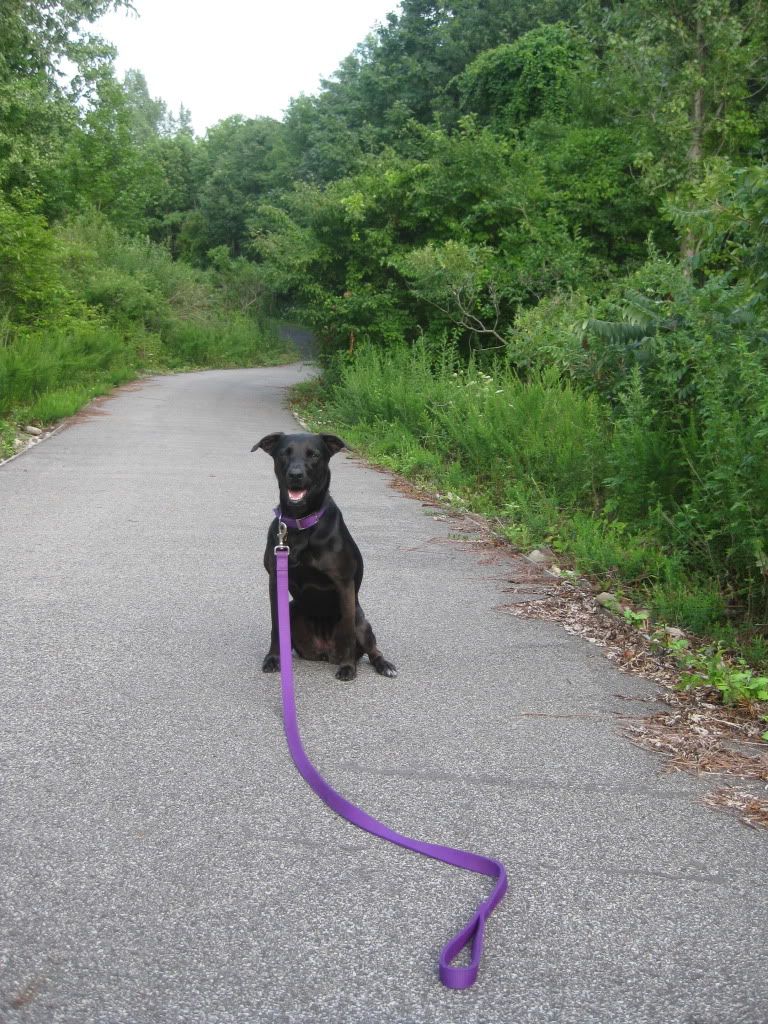
If a well-meaning but uninformed person approaches Marge looking to pet her, I have no problem body-blocking them and telling them NO if I do not feel Marge would be comfortable with that situation. Unfortunately, this is something that takes a little while to get used to doing. I can't tell you how many shy dog owners in my classes have allowed people to pet their dogs when the dogs are clearly not enjoying it. In fact, I myself have had to stand up for these dogs and politely point out to both the offending party and the owner/handler that the dog is uncomfortable.
It would be awesome for shy dog handlers to learn that it is OK to say "no" to a friendly advance from a stranger. By apologizing and saying that the dog is shy and learning how to comfortably be around people, it minimizes conflict and keeps the dog AND the person safe.
4. Learn about different aids and products that make the process a bit easier.
"I don't want her on pills." "I heard ____ product only works some of the time." "I don't think she's THAT scared so I don't want to use it." The excuses are many, but people seem very, very reluctant to add anything in to their training toolbox when it comes to alleviating some of a shy dog's anxiety. While I do not think the decision to put a dog on medication should be taken lightly, I do think that it is helpful for shy dog owners to learn about medication as an option, should a situation ever arise where the dog needs to be medicated.
In terms of natural or non-invasive products, it is true that the results vary from dog to dog. However, most of these products are cheap; some, like an anxiety/body wrap, can even be made from household items. Sampling some of these and seeing how the dog responds would, again, be quite beneficial. If the end goal is to have a happy, comfortable dog, what's wrong with speeding the process along?
On a similar note, it is also important for shy dog owners to know how veterinarians, behaviorists, and dog trainers can provide their services to help a shy dog get better.
5. Learn to be proactive.
There are certain things in the environment that you can't prepare for - you can't do much in advance about a crack of thunder or a child jumping out from behind a bush. However, sometimes shy dog owners walk their dogs right in to not-so-good situations. Walking in close proximity with crowds of people, particularly children, or taking the dog to the park on the 4th of July are, for example, not the greatest ideas, depending on what type of fears the dog has.
The same can be said for situations around the house - if the dog is afraid of strangers and you're expecting your neighbor (who, to top it off, refuses to leave the dog alone) to drop by, put the dog in the yard, or in another room, or in a crate, instead of "seeing how it goes."
Similarly, learning your dog's specific signs of anxiety can be useful in getting out of a situation before it spirals out of hand.
I hope that I get to put my knowledge and enthusiasm for working with fearful dogs in to motion. I'd also like to hear from you. Lots of my blogging buddies have fearful or shy dogs and I'm always looking for new ideas. What do you think should be covered in such a class?